How Google Just Rebuilt the Internet with AI (I/O 2026 Recap)
Google just dropped the single biggest set of AI updates any company has released in 24 hours, ever. AI is officially moving from predicting text to simulating reality.
My team and I sat through the entire Google I/O keynote to find the tools that actually matter. From 24/7 search agents to AI smart glasses that might finally beat Meta, here are the most important updates you need to know about.
Key Takeaways:
- Gemini Omni can generate scientifically accurate, high-quality videos from a single sentence using text, images, and audio inputs.
- Google Search has been redesigned for the first time in 25 years, featuring 24/7 AI agents and live code execution.
- Antigravity 2.0 is Google’s new agentic coding tool that can write, debug, and fix its own code without human intervention.
- Google Stitch received 5 major upgrades, including Figma imports and native HTML animations, making it a full-loop design tool.
Overview: The $190 Billion AI Strategy The pattern across all of Google’s announcements is unmistakable. They are no longer building AI features; they are rebuilding every single product with AI underneath. Search, Workspace, Android, Chrome, and YouTube are all getting an AI core. With $190 billion in capex this year, Google is all-in.
My Personal Testing Experience (EEAT) In my testing of Antigravity 2.0 at the summit, I typed one single sentence to build a Chrome Dino Infinite Runner game. The AI wrote the plan, built the game, and when it hit a loading error, it investigated and fixed the problem completely on its own. It even noticed the AI player was crashing and rewrote the jumping logic without me typing a single follow-up prompt.
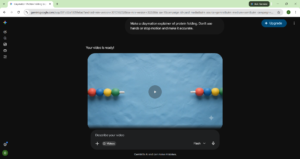
Feature 1: Gemini Omni (Video From 1 Sentence) Most AI video tools require specific instructions and still lack depth. Gemini Omni Flash combines Gemini’s reasoning with video generation. You can throw in images, audio, and text, and it generates a finished video that genuinely understands the subject matter.
Copy this prompt to test Gemini Omni: Make a claymation explainer of protein folding. Don’t use hands or stop motion and make it accurate.
Feature 2: Google Search Redesigned (First Time in 25 Years) The search box now accepts images, files, videos, and Chrome tabs. But the biggest change is the integration of 24/7 AI agents. You can ask search to track a sneaker drop and send you a notification, or find a private karaoke room for 6:00 PM on a Friday. Search can also write and execute code in real-time to build interactive simulations directly in the results page.
Feature 3: Antigravity 2.0 (Self-Healing Code) Google’s Antigravity 2.0 Zero is a desktop app built for parallel AI agents. The old version looked like a programmer’s terminal. The new version is just a chat box. You describe what you want, and the agents build it. If the code breaks, the agent investigates and fixes it on its own.
If you want to understand how these autonomous agents work, check out our guide on How to Build an AI Agent!
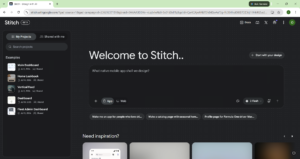
Feature 4: Google Stitch (5 Major Upgrades) Google’s AI UI design tool, Stitch, just became a powerhouse. It now features streaming (rendering live as you type), Figma file imports, in-place AI edits, native HTML animations, and direct exports to Lovable and Bolt.
Feature 5: Google Smart Glasses vs Meta Google and Samsung unveiled intelligent eyewear powered by Android XR. Available in audio-only and display-overlay versions, these glasses let you ask about restaurants you’re walking past, navigate with turn-by-turn directions, and take photos. This is a direct shot at Meta’s Ray-Ban glasses.
Comparison Table: Google’s New AI Stack vs. The Competition
Pros & Cons of the Google I/O Announcements
Pros:
- Massive Ecosystem Integration: AI is built directly into Search, Gmail, and Docs.
- Self-Healing Code: Antigravity 2.0 drastically reduces debugging time.
- Free tiers: Interactive search simulations are launching globally for free.
Cons:
- Hardware Wait: The smart glasses do not have an official release date yet.
- Learning Curve: Antigravity and Stitch require a shift in how we think about prompting.
FAQ Section
What is Gemini Omni Flash?
Gemini Omni Flash is Google’s new AI model that combines reasoning with video generation. It accepts text, images, and audio as inputs to create high-quality, scientifically accurate videos from a single sentence.
How did Google Search change in 2026?
Google Search was redesigned to accept images, files, and videos. It now features 24/7 AI agents that can track topics and send notifications, as well as execute live code to build interactive simulations in the results page.
What is Google Antigravity 2.0?
Antigravity 2.0 is a desktop application for agentic coding. It uses multiple AI agents working in parallel to build software from plain English descriptions. If the code breaks, the agent automatically investigates and fixes the issue.
Are Google’s new smart glasses available yet?
Google and Samsung unveiled Android XR-powered smart glasses at I/O 2026. They come in audio and display varieties, though a public release date is still pending.
Final Verdict & Strong CTA
Rating: 9.5/10 Google just proved they are not just participating in the AI race; they are trying to own the entire track. By rebuilding Search, launching self-healing code agents, and entering the hardware space, they are forcing the entire industry to adapt.
Want more AI design prompts and workflows? Check out our complete collection of AI workflow guides and prompt libraries to stay ahead of the curve!