
The Biggest AI News This Week: Meta Muse Code & China’s Rise
If you are looking for the biggest AI news this week, you are in the right place. Zuckerberg got tired of watching Sam Altman and Sundar Pichai dominate the AI space, so Meta just launched its own answer to Claude Code and Codex. It’s called Muse Code, and it can make software, 3D models, and entire games for you.
While American companies are fighting amongst themselves, China is catching up insanely fast. From Alibaba’s Qwen 3.8 to DeepSeek’s record-breaking prices, the AI cold war is officially heating up. Here is my hands-on breakdown of the most important updates.
Key Takeaways:
- Meta launched Muse Code, a direct rival to Claude Code, powered by the Muse Spark 1.2 model with a 1 million token context window.
- Alibaba’s Qwen 3.8 is a 2.4 trillion parameter model that can autonomously code for 16 days without human intervention.
- DeepSeek V4 Flash is now the cheapest major AI model on the market, forcing OpenAI to cut GPT-5.6 prices by up to 80%.
- Genspark launched GenOffice, a completely free, open-source AI alternative to Microsoft Office.
AI News This Week: Overview & EEAT
The Artificial Intelligence market is no longer just about who has the smartest chatbot; it is a geopolitical war between the US and China.
In my testing for this AI news this week roundup, I downloaded Meta’s Muse Code and pushed it to its limits. I found that its “memory” feature is the real game-changer. Unlike standard AI that forgets your project structure, Muse Code keeps background agents active throughout your session, building up context over time. When I asked it to build a 3D character in Blender, it remembered the art style from a completely different prompt I had given it 20 minutes earlier.
Feature 1: Meta Muse Code (Zuckerberg’s Claude Rival)
Meta just entered the agentic coding race with Muse Code, powered by the new Muse Spark 1.2 model. It is designed to handle long tasks instead of just generating small code snippets.
Its biggest feature is memory. It keeps background agents active, so if it crashes mid-task, it picks up exactly where it left off. When a job is big enough, it splits the work with separate sub-agents working in parallel. In testing, it built an F1 racing game (Monza Ultimatum) and a cinematic scroll-animated website simultaneously with no collisions.
If you want to see how other tech giants are handling agentic coding, check out our Google Antigravity 2.0 review!
Feature 2: Alibaba Qwen 3.8 (16-Day Autonomous Coding)
Alibaba just launched Qwen 3.8, a massive 2.4 trillion parameter model. It is beating top US models on reasoning benchmarks, research, and computer use.
Alibaba calls it an “always-on workmate.” Most AI stops when you stop giving it instructions. Qwen 3.8 is designed to keep working on long tasks for hours. In one example, Qwen 3.8 Max kept coding on its own for 16 days, self-testing and improving the project without constant human help. It can design computer chips, verify company finances, and draft design proposals autonomously.
Feature 3: DeepSeek V4 Flash & OpenAI Price Wars
China’s pressure is forcing OpenAI to slash its prices. DeepSeek launched V4 Flash, a model built for AI agents with a 1 million token context window. The crazy part? It costs just 14 cents to process a million input tokens, making it the cheapest major AI model available.
In response, OpenAI cut GPT-5.6 Luna’s API cost by 80% and Terra’s by 20%. They also introduced a fast mode for GPT-5.6 Sol (2.5x faster speeds) and made GPT 5.6 Luna unlimited for free users. AI is officially helping build better, cheaper AI.
If you want to learn how to run these cheap models locally for $0, check out our guide on Free AI Models!
Feature 4: Genspark GenOffice (Free Microsoft Alternative)
US company Genspark just released the world’s first open-source AI office for PC and Mac. It’s called GenOffice, and every tool comes with an AI assistant built inside it.
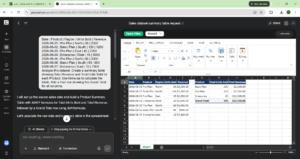
You can type “create a professional resume” and it writes it directly on the page. For spreadsheets, you can ask it to analyze large data sets and build summary tables with formulas. It can even polish PowerPoint slides and highlight key findings in PDFs. The tool is completely free; you only pay for the AI you use, compared to Microsoft’s $210 premium plan.
Comparison Table: The AI Coding War
Pros & Cons of This Week’s AI Updates
Pros:
- Massive Price Drops: OpenAI and DeepSeek are in a price war, making AI incredibly cheap for developers.
- True Autonomy: Models like Qwen 3.8 can code for days without human babysitting.
- Free Alternatives: Genspark GenOffice breaks the Microsoft Office monopoly.
Cons:
- Geopolitical Fragmentation: The US and China are walling off their best models from each other.
- Data Privacy: Meta’s cheaper “Contributor” model for Muse Code may use your code for product improvement.
FAQ Section
What is Meta Muse Code?
Meta Muse Code is a new agentic coding tool by Meta, powered by the Muse Spark 1.2 model. It rivals Claude Code and features background agents that remember context and can split work into parallel sub-agents.
Can AI code on its own for 16 days?
Yes. Alibaba’s Qwen 3.8 Max model was tested coding continuously for 16 days. It is designed as an “always-on workmate” that can self-test, improve projects, and add features without constant human prompts.
Is DeepSeek V4 Flash cheaper than GPT?
Yes. DeepSeek V4 Flash costs just 14 cents per million input tokens, making it one of the cheapest major AI models available. This forced OpenAI to cut the price of GPT-5.6 Luna by 80%.
Is Genspark GenOffice really free?
Yes. Genspark GenOffice is a completely free, open-source alternative to Microsoft Office. You only pay for the AI API usage if you use the built-in AI assistants to write documents or analyze data.
Final Verdict & Strong CTA
Rating: 9.5/10 This week’s AI news this week proves that the AI industry is shifting from chatbots to autonomous, long-running agents. With Meta entering the coding ring and China driving prices down to pennies, developers and businesses are the biggest winners.
Want more AI design prompts and workflows? Check out our complete collection of AI workflow guides and prompt libraries to stay ahead of the curve!
Ready to build autonomous software? Click here to try Meta Muse Code and test the Muse Spark 1.2 model today.