AI can write an entire article in 10 seconds. But there is a huge problem: it usually sounds boring, generic, and like a machine wrote it.
As an AI/ML professional, I know exactly how AI models predict text. To make AI sound like a real human, you have to restrict its “creativity” and give it strict rules. Here is my exact 3-step workflow to write human-sounding content.
Step 1: The “Outline” Prompt Never ask AI to “write a blog post” all at once. It will lose focus. First, ask it for an outline. Paste this exact prompt into ChatGPT:
“I want to write a blog post about [Pick a simple topic, e.g., ‘Benefits of Drinking Water’]. Do not write the article yet. Just give me a highly detailed, logical outline with 4 main sections.“
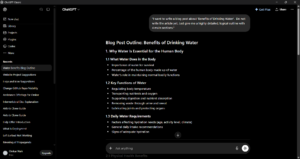
Step 2: The “Human Tone” Prompt Once you like the outline, it’s time to write. The secret here is to tell the AI what not to do. Paste this prompt:
“Now, write Section 1 of the outline. Rules: Do not use robotic phrases like ‘In conclusion’ or ‘Delve into’. Do not use overly complex words. Write at an 8th-grade reading level. Use short sentences. Make it sound like a helpful friend explaining this to me over coffee.”
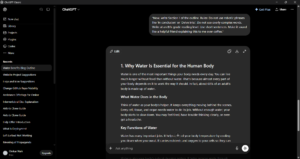
Step 3: The “ML Engineer” Pro-Tip Here is the secret sauce: AI models have a “Temperature” setting (how random their answers are). For blog posts, you want low randomness. But the real trick is to add your own personal story. After the AI writes the section, add one sentence about your own experience. AI cannot fake human experience, and Google loves that.
Personally, as an engineer, I used to survive purely on coffee and energy drinks, but once I forced myself to drink a bottle of water before noon, my afternoon brain fog completely disappeared
Conclusion Stop copy-pasting generic AI text. By breaking it down into an outline, giving it strict tone rules, and adding your own human experience, you can produce high-quality content in minutes.
What topic are you going to try this workflow on? Let me know in the comments!