
How Loop Engineering AI Will Change Your Productivity Forever
If you want to understand loop engineering AI, you are in the right place. For the last two years, you have been doing a job you didn’t even know you had. Every time you opened ChatGPT, typed a prompt, checked the answer, and fixed it, you were operating the AI. You were the loop.
But that is changing. The next big skill isn’t writing better prompts anymore; it’s building loops. A loop is a system where the AI keeps an eye on something for you, takes the next step on its own, remembers what it has done, and stops when the job is finished. Here is how to master it.
Key Takeaways:
- Loop engineering AI shifts the human from being the operator to being the manager.
- Unlike traditional automation (like Zapier) which fires once and stops, a loop continuously watches a situation and remembers past actions.
- You can build loops to watch for back-in-stock products, scan job boards, or hunt for business leads.
- The golden rule of loops: Never let them touch your money, reputation, or customers without a human gate.
Overview: What is Loop Engineering AI?
Normal prompting looks like this: You ask, the AI answers, you check it, and you ask again. You are in the chair the whole time. Artificial intelligence changes when you introduce loops. Now, the AI can keep checking, working, and deciding the next step on its own inside a boundary you set. A good loop answers five questions: What should it watch? How often? What change is it hunting for? What should it do when that happens? When should it stop and ask you?
My Personal Testing Experience (EEAT)
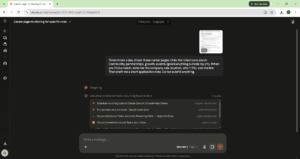
In my testing of loop engineering AI using Claude’s new /loop command, I found that the biggest unlock is memory. I built a loop to watch job boards at top AI companies. Instead of just checking once, the AI fired off 10 agents simultaneously, compared them to my profile, and remembered which jobs it had already shown me so it wouldn’t ping me twice. It even drafted application notes and flagged where it bent my rules. It felt like hiring a dedicated career analyst in 5 minutes.
Feature 1: The Back-in-Stock Watcher
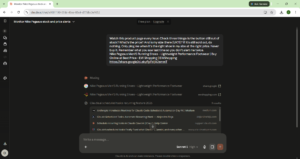
There is a product you want, but it is out of stock. Instead of refreshing the page like a maniac, you can hand the job to a loop. It runs on the cloud, so you can shut your laptop and go to sleep while it checks the page every hour.
Copy this prompt to test Loop Engineering AI: Watch this product page every hour. Check three things: Is the button still out of stock? What’s the price? And is my size there (UK11)? If it’s still sold out, do nothing. Only ping me when it’s the right shoe in my size at the right price. Never buy it. Remember what you saw last time so you don’t alert me twice.
Feature 2: The AI Job Watcher
If you want a role at a top AI company, you do not want to be checking their career pages every day. This loop watches multiple companies simultaneously and drafts your application notes.
Copy this prompt to find your dream job: Three times a day, check these career pages. Only the roles I care about: Community, partnerships, growth, events. Ignore engineering roles. Ignore anything outside my city. When you find a match, send me the company, role, location, why it fits, and the link. Then draft me a short application note. Do not submit anything.
Feature 3: The Demand-Signal Scout
Instead of waiting for customers to find you, a loop can scan the entire internet for people raising their hands looking for your services. It grades each lead and drafts an outreach message.
Copy this prompt to find business leads: Every few hours, go scan Reddit, X, and funding announcements. Look for people raising their hand needing an AI consultant. Grade each one on how strong the signal is. Then draft a personal message for the good ones, but never send it. Wait for me.
If you want to understand the foundation of these autonomous systems, check out our guide on How to Build an AI Agent!
Comparison Table: Prompting vs. Automation vs. Loops
Pros & Cons of Loop Engineering AI
Pros:
- True Autonomy: The AI works in the background while you sleep.
- Contextual Memory: It remembers what it already did so it doesn’t repeat itself.
- Time Savings: Replaces hours of manual refreshing and checking websites.
Cons:
- Requires Strict Rules: If you don’t set boundaries, the AI might do something you didn’t want.
- API Costs: Running loops on the cloud 24/7 can burn through AI credits if not monitored.
FAQ Section
What is loop engineering AI?
Loop engineering AI is the practice of building systems where the AI continuously monitors a situation, remembers past actions, and takes steps on its own without human babysitting. It shifts the human from being the operator to being the manager.
How is a loop different from Zapier automation?
Traditional automation (like Zapier) is a light switch; it fires one fixed action and stops. A loop is a guard dog; it continuously checks a situation, compares it to past memory, and decides if action is needed.
Can AI loops buy things for me automatically?
They can, but they shouldn’t. The golden rule of loop engineering is that any loop touching your money, reputation, customers, or legal matters must have a “human gate” where it stops and asks for your permission first.
What is the Claude /loop command?
The /loop command in Claude allows users to set up AI agents that run on Anthropic’s cloud servers on a set schedule. This allows the AI to check web pages and perform tasks even when your computer is turned off.
Final Verdict & Strong CTA
Rating: 9.5/10 Prompt engineering taught us how to talk to AI. Loop engineering AI teaches us how to hand off the work entirely. If you are still sitting there refreshing pages by hand, you are going to be left behind by the people who deployed loops a year ago. Start stupidly simple, and let the AI do the boring work.
Want more AI design prompts and workflows? Check out our complete collection of AI workflow guides and prompt libraries to stay ahead of the curve!
Ready to automate your life? Click here to try Claude AI and start building your first loop today.