If you want to build a software product, the traditional path looks like this: Learn to code, hire a developer, spend months building, and then figure out marketing.
But a new category of tools called “Vibe Coding” is completely changing this. You no longer need to know how to code; you just describe what you want in plain English, and the AI builds it for you.
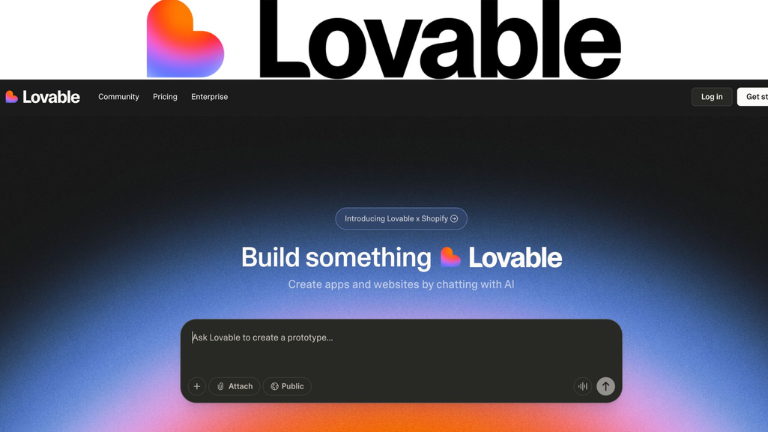
One of the most powerful tools leading this charge is Lovable. But it doesn’t just build the user interface. It claims to handle the hardest part of software: the launch.
Here is my technical breakdown of how Lovable works, and why it’s becoming a go-to-tool for founders.
Phase 1: The “Vibe Coding” Build
Instead of writing React or CSS, you use natural language. You give Lovable a prompt like: “Build me a client management app with a contacts page, a drag-and-drop deals pipeline, and a revenue dashboard.”
The “Plan Mode” Feature: Before it writes a single line of code, Lovable generates a blueprint. It plans out the database structure, the UI components, and the user flow. You review the plan, approve it, and then it starts building.
Design Referencing: You don’t need to be a designer. If you see a website you like (like Linear or Notion), you can paste the URL into Lovable, and it will analyze the spacing, colors, and layout, and apply that aesthetic to your app.
Phase 2: The “Scary” Backend (Made Easy)
The biggest hurdle for non-technical founders is the backend—saving data, user logins, and deployment. Lovable handles this with one click.
- Adding a Database: With one prompt (“Save all data to a database”), Lovable sets up the infrastructure so when a user closes the app and comes back, their data is still there.
- User Authentication: You can prompt it to add email/password logins. Lovable automatically creates the security rules, database tables, and signup pages.
- Deployment: When you are ready to launch, you don’t need to configure AWS servers. You click “Publish,” and Lovable hosts the app and gives you a real URL.
Phase 3: The “Secret Weapon” (Launch Assets)
This is where Lovable separates itself from standard AI coders. Building the app is only 50% of the work. The other 50% is the launch material.
1. Pitch Decks (PowerPoint): You can prompt Lovable to generate an investor pitch deck for the app you just built. It will actually take screenshots of the app it just created and put them into a downloadable PPT file.
2. Product PDFs: You can prompt it to create a clean, professional 1-page product summary PDF to send to clients after a demo call.
3. Social Media Launch Posts: You can ask it to write 5 different LinkedIn launch posts (Data angle, Personal Story angle, etc.) to announce your product, right inside the chat.
An Interesting Addition: The AI Assistant
You can build an AI feature into your app. For example, you can prompt Lovable to add an assistant where users can type “Add a new contact: James from Disney” in plain English, and the app will automatically parse the name, company, and contact info, and add it to the database without the user filling out a form.
The “Engineer” Reality Check
Is “Vibe Coding” a magic bullet? No. If you are trying to build the next Facebook with highly complex, custom algorithms, you will eventually hit a wall and need a real developer.
However, for 90% of SaaS startups, internal company tools, or freelance client portals, Lovable gets you 95% of the way there in an afternoon.
Conclusion The gap between having an idea and putting a working product in front of users is shrinking fast. Tools like Lovable are turning solo founders into entire product teams.
Have you tried “Vibe Coding” yet? What did you build? Let me know in the comments!